
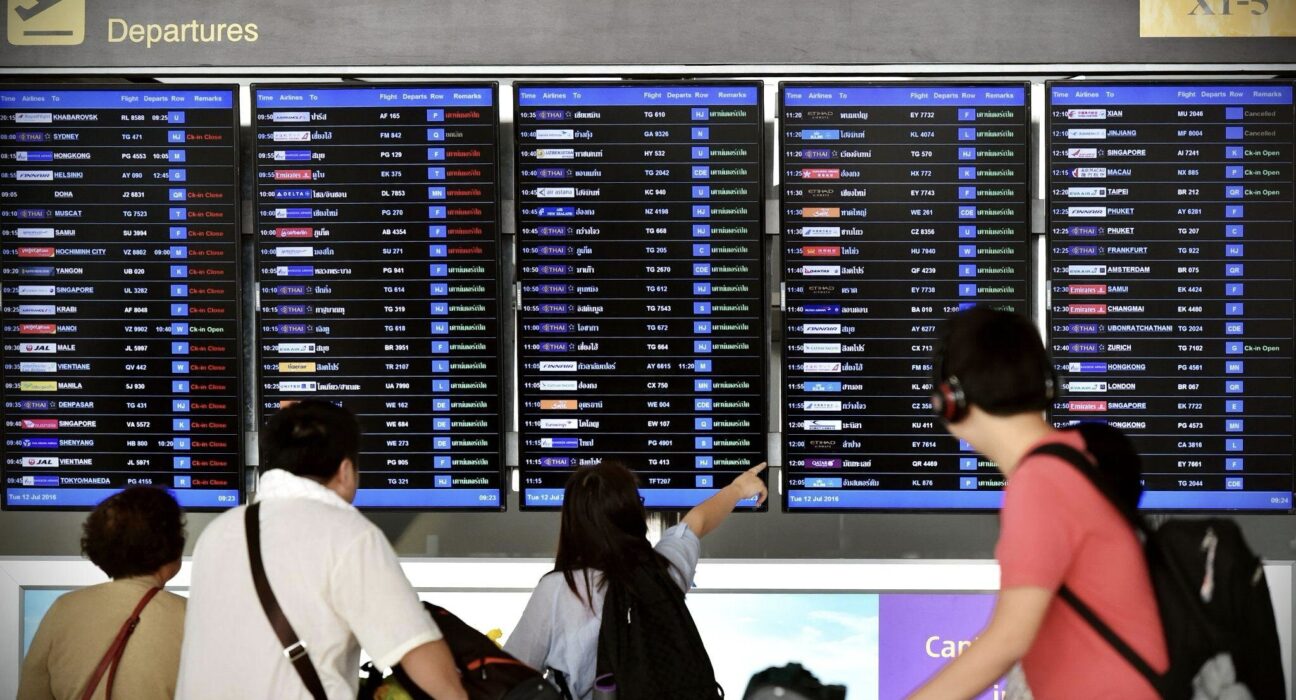
Southeast Asian aviation kept expanding into late 2026. OAG data for September 2026 put regional capacity at around 48 million seats, with Indonesia the largest market — up more than 7% year on year — and Vietnam among the fastest growing at over 9%. Looking further ahead, Mordor Intelligence projects the region’s aviation market to reach roughly US$47.9 billion by 2030.
More flights and more routes sound like pure good news for travelers. But abundance creates its own problem. When there are hundreds of possible airlines, fares, and combinations, the difficulty is no longer whether a seat exists — it is finding the right one, at the right price, among far too many to check by hand.
A growing market rewards travelers only if they can actually see it. The common habit across the region is to open one familiar app and treat whatever it shows as the whole picture. In a small market that is merely limiting. In a large, fast-growing one, it means missing most of what is available — better times, better prices, better routings sitting one search away, unseen.
Wesley Wijaya, Chief of Partnership at Airpaz, frames his job as closing that gap between what exists and what a traveler can see.
“Growth does not help a traveler who is only looking at a sliver of the market,” Wijaya says. “The real work is bringing as many airlines as possible into one place, so a person is choosing from what genuinely exists — not from the handful their usual app happens to show.”
How Airpaz turns a crowded market into a clear choice
That is the point of building wide airline coverage. A single search on Airpaz spans more than 450 airlines, putting low-cost names like AirAsia, Scoot and Cebu Pacific in the same comparable list as full-service carriers such as Singapore Airlines, Garuda Indonesia and Thai Airways. The aim is that a busier sky becomes an advantage for the traveler rather than a source of confusion.
Just as important, Wijaya says, is meeting travelers where they are — which in this region means local. Airpaz supports local payment methods, currencies, and languages across its markets, and has been building those airline and market relationships since 2011.
“A wide choice only works if a traveler can act on it comfortably,” Wijaya says. “That means their language, their currency, their way of paying. Reach and local comfort are two halves of the same job — one is useless without the other.”
He is clear about the limits of a booking platform.
“We do not fly the planes, and we cannot add a route an airline has decided not to run,” he says. “What partnerships and wide coverage can do is make sure that when a good option is out there, the traveler actually sees it instead of assuming it does not exist.”
As the region’s skies fill in, that is where Airpaz’s value sits. Not in the number of flights, but in turning a growing, crowded market into a single, honest view — so travelers can find the one seat that fits.
Read Also: US-Israel-Iran Conflict Hits India: Crude Soars, Rupee Falls, Airlines Brace for ₹180 Billion Losses