
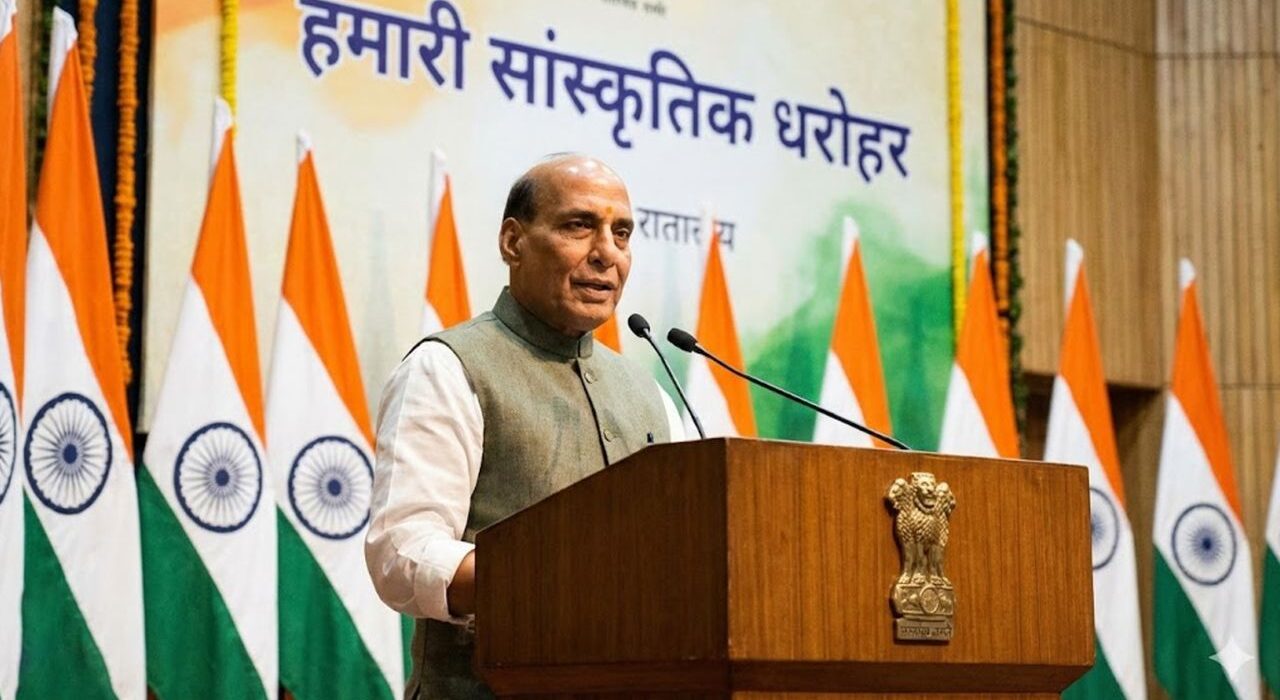
According to Indian media, Defence Minister Rajnath Singh spoke at the Sindhi Samaj Sammelan in New Delhi. He highlighted the strong cultural connection between India and Sindh.
While Sindh was not part of India after the 1947 Partition, Singh stressed that the region remains a key part of India’s cultural and historical heritage.
Rajnath Singh highlights the India- Sindh connection
He said, “Civilisationally, Sindh will always be a part of India,” pointing out that geopolitical boundaries are not permanent. He even suggested that Sindh might one day return to India, said, “Who knows, tomorrow Sindh may return to India again.”
His comments resonated with the emotional ties of the large Sindhi community in India, many of whom trace their roots back to Sindh. The region is also the birthplace of the Indus Valley Civilization and holds great importance for Sindhi Hindus, who still keep alive cultural traditions linked to their ancestral homeland. Singh’s statements emphasized the lasting cultural and historical connections that go beyond the borders set in 1947.
How Pakistan will reacts over this?
Singh’s statements have garnered significant attention, especially considering the sensitive timing after the May Operation Sindoor. His comments about the possibility of Sindh returning to India might further stress diplomatic ties between India and Pakistan, adding complexity to their already tense relationship. These remarks are likely to spark strong reactions from Pakistan in the coming days.
Rajnath Singh comments highlight the deep cultural and emotional connection between India and Sindh, especially among the Sindhi diaspora. Despite political divides, the shared history, culture, and religion continue to influence the identities of Sindhi people, making them an enduring part of India’s national awareness.
Read also: New labour Code: Fixed-term employees get gratuity after 1 year of service