
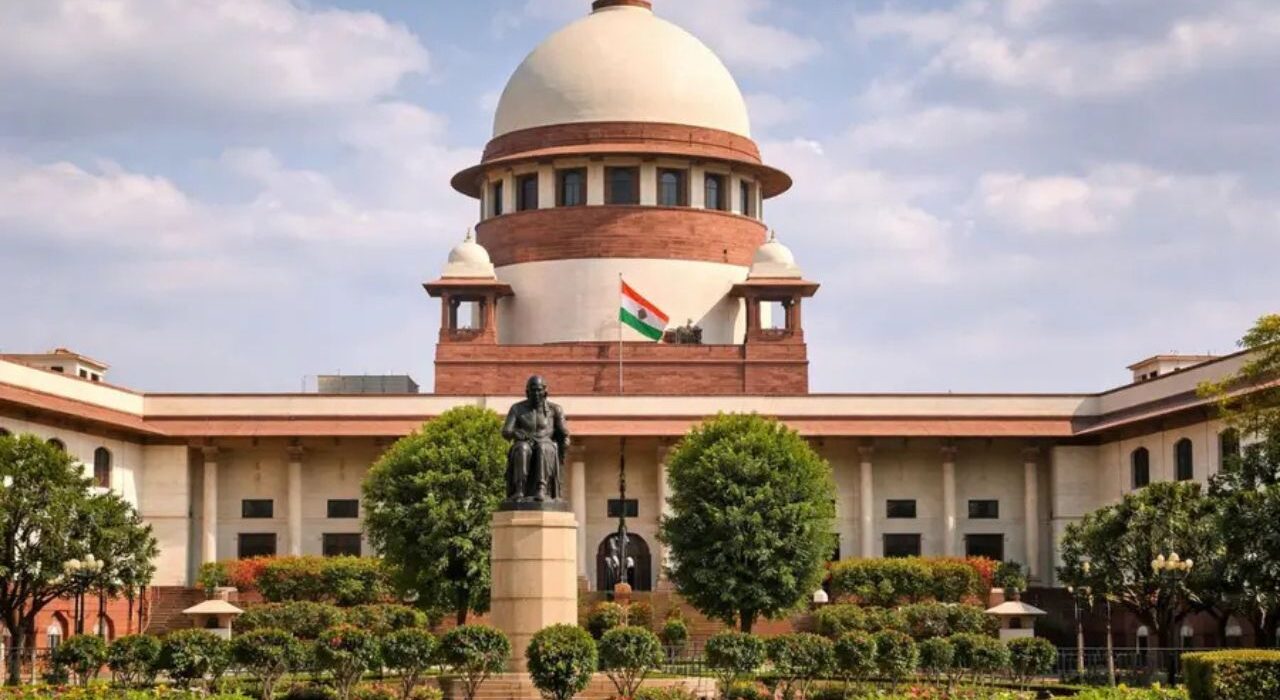
The Supreme Court upheld a decision by the Rajasthan High Court that protects the rights of qualified candidates from reserved categories in public recruitment. It stated that candidates who score higher than the cut-off set for the General or Open category considered in the open category, even during the shortlisting stage. They cannot restricted to their respective reserved categories simply because of their social classification.
Supreme Court Protects rights of Top Reserved Candidates
A Bench of Justices Dipankar Datta and Augustine George Masih dismissed appeals made by the Rajasthan High Court administration and its Registrar. These appeals challenged a Division Bench decision from the Rajasthan High Court on September 18, 2023.
The issue arose from a recruitment drive initiated in August 2022 for 2,756 posts of Junior Judicial Assistant and Clerk Grade-II in courts throughout Rajasthan. The process included a written exam worth 300 marks and a typewriting test worth 100 marks. Candidates who passed the written test shortlisted for the next stage, limited to five times the number of vacancies within each category.
Cut off marks for Reserved categories is higher than General category
When the results released in May 2023, a problem emerged. The cut-off marks for several reserved categories, including SC, OBC, MBC, and EWS, were higher than the cut-off for the General category. This led to some reserved category candidates excluded even though they scored above the General cut-off but fell below the cut-off for their own categories.
Dissatisfied candidates approached the Rajasthan High Court. They argued that the recruitment authority treated the open category as a closed area for only unreserved candidates. They claimed this violated Articles 14 and 16 of the Constitution.
The High Court agreed with their argument. It said that while category-wise shortlisting is allowed, candidates from reserved categories who score above the General cut-off, without any relaxation included in the open category list during shortlisting. It ordered that the open list created solely on merit, followed by the reserved lists, excluding candidates already placed in the open category.
The Supreme Court dismissed the argument that this inclusion gives a “double benefit” to reserved candidates. The Court emphasized that the General or Open category is not a quota for any class. It is a merit-based category available to everyone.
Read also: CM Stalin to Launch TN Laptop Scheme Today: i3 Processor, 8GB RAM for 20 Lakh College Students