
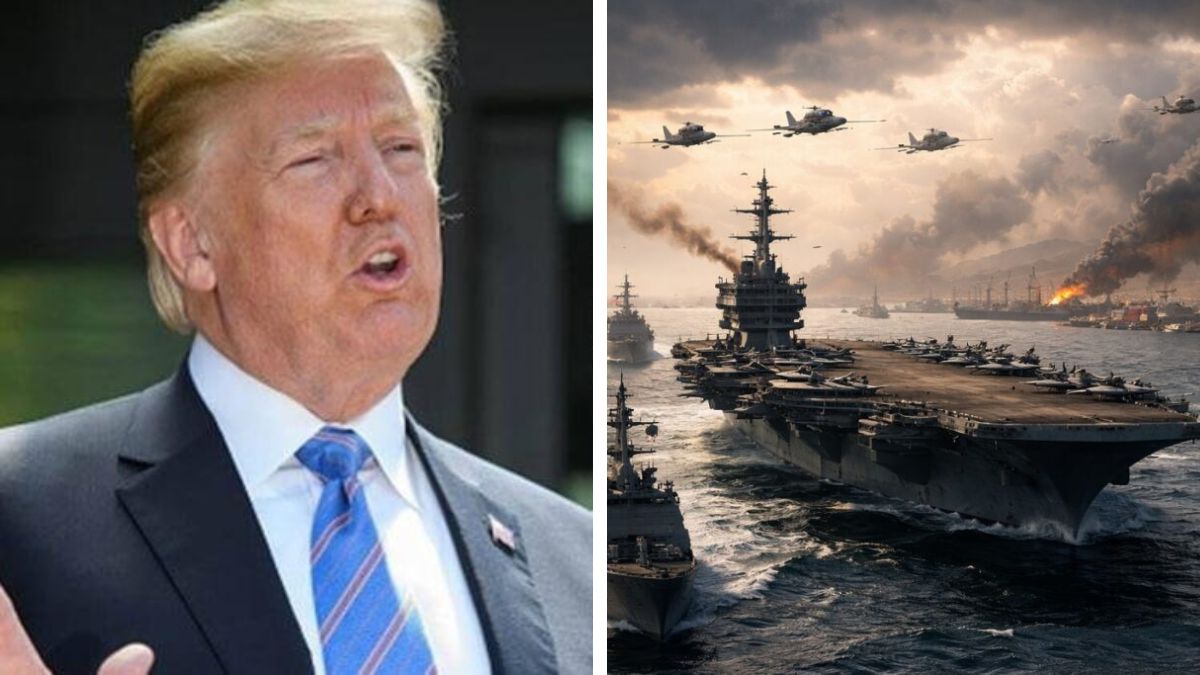
US Navy starts the full naval blockade of Iranian ports after long peace talks in Islamabad. President Trump announce the move and caused the global oil prices to rise and prompts the strong reactions from Iran and key players.
Since 20% of the world’s crude passes through the strait, the blockade risks worsening the conflict and destabilizing global energy markets.
U.S. Navy Enforces Blockade on Iran Oil Exports
The Islamabad talks between US Vice President JD Vance and Iranian negotiators lasted 21 hours but ended without an agreement, mainly because Iran refused to stop uranium enrichment and dismantle nuclear facilities.
Trump’s order then directed US Central Command to enforce a blockade on all Iranian ports, targeting crude and gas exports that make up Tehran’s main source of income.
Oil markets react sharply to the blockade
Oil prices spiked right after the blockade announcement. US crude rose 8% to $104.24 per barrel, while Brent crude climbed 7% to $102.29. Analysts warned of more increases as Iran’s exports of roughly 2 million barrels per day face disruption, which is tightening global supply. Iranian parliamentary speaker Mohammad Bagher Ghalibaf cautioned consumers to enjoy the current price of gasoline, suggesting that high fuel costs could continue if the blockade lasts.
Read also: PM Modi to Launch Delhi–Dehradun Economic Corridor in Uttarakhand Today: Key Details